Patio and outdoor living
Patio and Outdoor Living Lighting in Sacramento
A patio is used, not just viewed. Lighting has to support the evening you actually have: cooking, sitting, eating, and walking back to the door—without turning the table into a spotlight or the neighbor’s yard into the fourth wall.
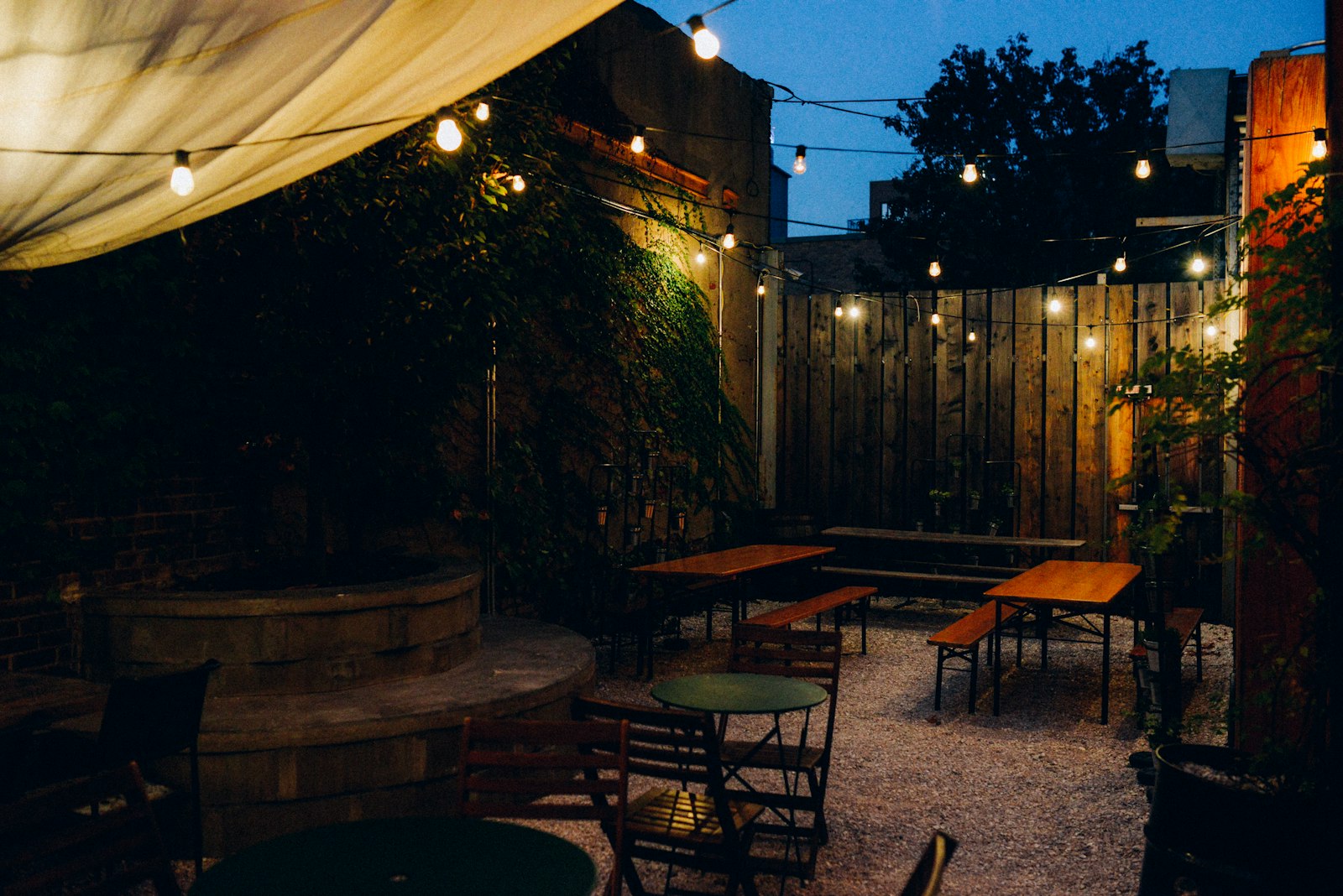
An evening, in the order it happens
The useful design conversation is not “how many fixtures.” It is what you do after sunset. Some households cook and sit down. Some only step out for a drink. Some use the space as a second living room until late, then want it dark. The lighting should follow that sequence, not a catalog layout.
- Arrive
Circulation
The walk from the kitchen door, the step off the deck, the edge you catch with a foot. That is still path lighting, even if the route is only a few pavers. See path and step lighting.
- Cook
The work surface
A grill or outdoor kitchen needs light on the grate, the board, and the controls—not in the cook’s eyes and not across the lot line. Under-counter or soffit-mounted shielded lights are a common answer when the structure can hide them.
- Sit
Conversation
Lounge seating usually wants a lower level than the table. A quiet wash on a fence, a nearby plant, or a downlight from a beam can hold the room without lighting faces from below.
- Eat
Dining
People need to see food and faces. A shielded source above the table, or light bounced off a nearby wall, is usually kinder than a spot aimed at the centerpiece. If the lamp sits in the seated sightline, the conversation gets less comfortable.
A roof changes the options
A cover, pergola, or deep overhang gives you a place to hide downlights. That is often the cleanest way to get ambient light without a lamp at eye height. An open deck has no such ceiling. Light then has to come from the house wall, nearby trees, low sources near furniture, or a carefully shielded post.
String lights can be a layer. They are not a lighting plan by themselves. Bare bulbs at seated eye height glare, and they do nothing for a step at the deck edge. If they are used, they work better as a secondary glow, with the table and the walking surface handled separately.
Leave the house as a backdrop
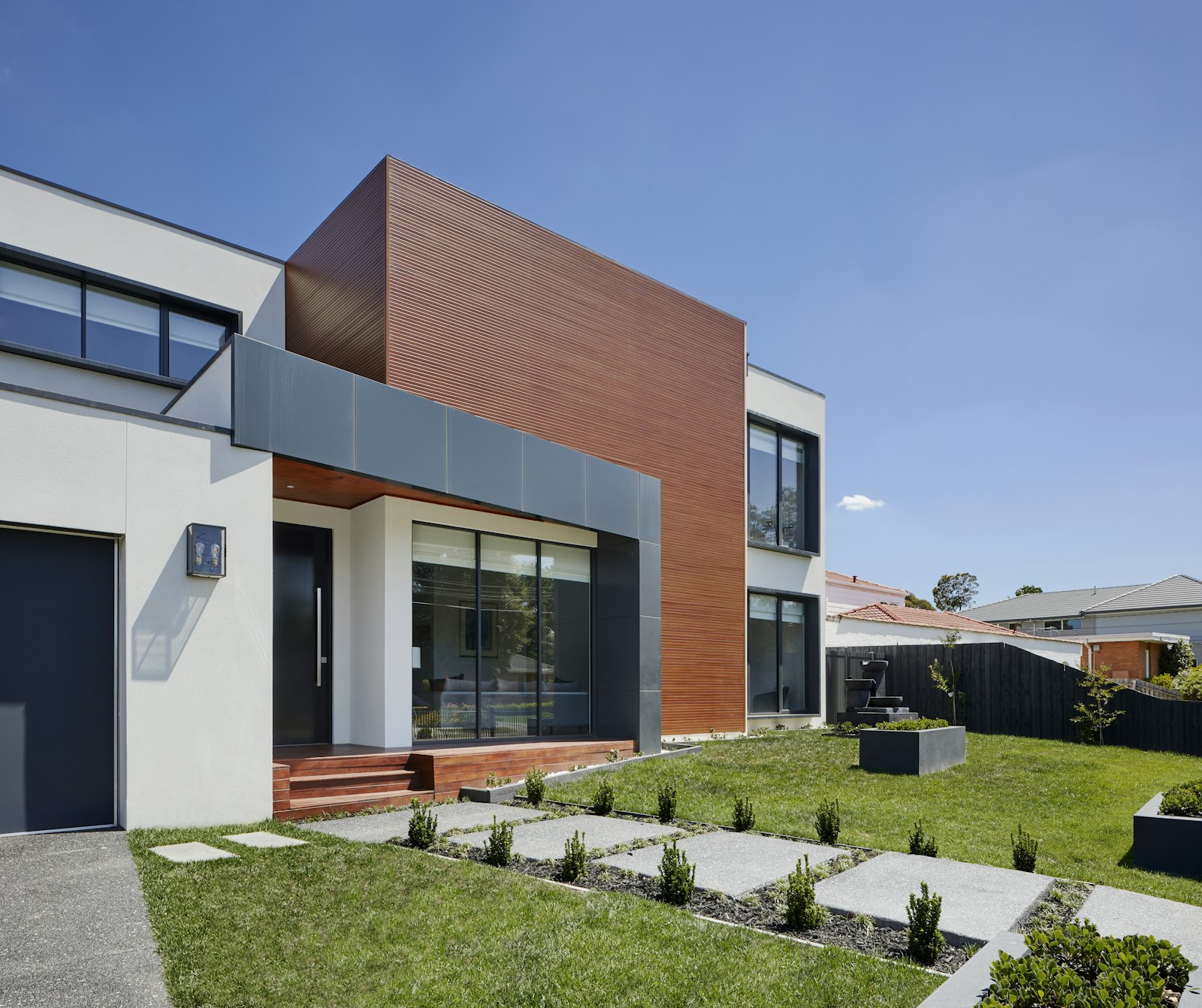
From a patio, the brightest plane is often the glass of the house. Interior lamps already light that wall. Adding a strong wash on the same surface can flatten the architecture and the reflection. It is usually better to light the outdoor room’s own pieces—table, planting, a fence, the walking edge—and let the house sit behind them. Walls that do need light are architectural lighting.
When the lights turn on and off should match how you use the space. Many households want the patio early in the evening and not at one in the morning. A timer or clock that follows that habit is more useful than a photocell that leaves everything on until dawn. A manual switch still matters so a late dinner is not cut off.
Warm lamps attract insects in the Sacramento Valley. Enclosed fixtures, warmer color, and light kept on surfaces rather than flooding the air all help. They do not make a patio insect-free.
What to tell us
The useful details are ordinary: where you sit, whether you cook outside, whether children use the steps, how late the space stays occupied, and whether the patio is covered. Photos of the space at dusk—if you have them—are more helpful than a fixture count.
Tell us how you use the patio after sunset
Call +1 (916) 927-9161 or email [email protected]. Dining, seating, cooking, and the walk back inside are enough to start.