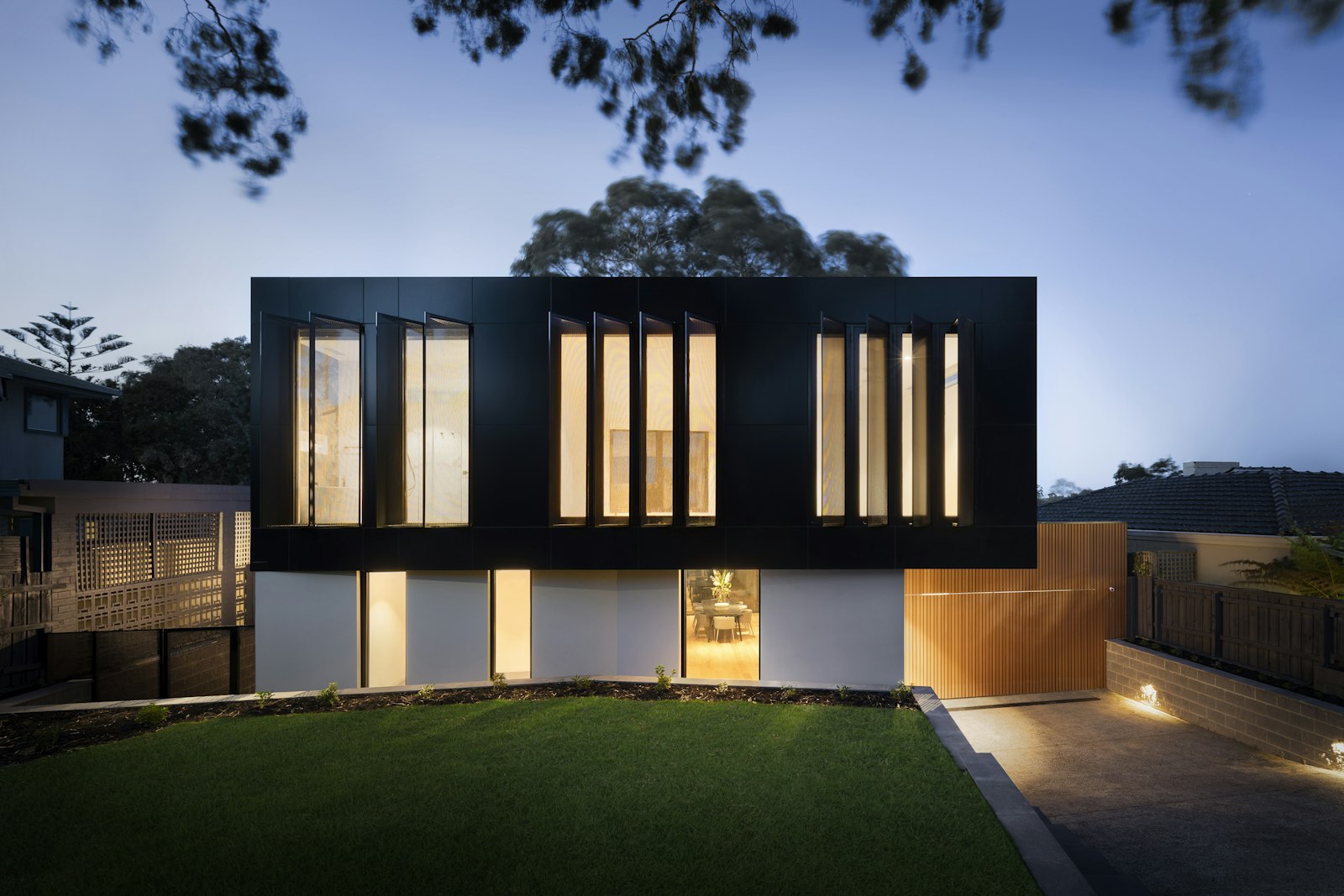
Architectural lighting
Architectural Lighting for Sacramento Homes
This work is light on the house: walls, columns, eaves, and the last few feet to the door. The building is the subject. Planting may sit in the same view, but the first decisions come from the façade—what it is made of, how it is seen, and where a lamp would glare.
Start with the wall, not the fixture
Brick, stacked stone, and rough stucco throw shadows when light rakes across them. Smooth painted stucco and flat siding do the opposite: close, steep light often shows waves and patches that disappear in daylight. Board-and-batten, wood slats, and deep recesses each catch light differently. The same fixture aimed the same way will not treat those surfaces equally.
It also matters which side of the house you are lighting. A street façade may need a quieter treatment than a rear wall you sit with from the patio. Glass already leaking interior light is part of the picture; adding a strong wash on that same plane can flatten both the architecture and the reflection.
Three tools, used when the house asks for them
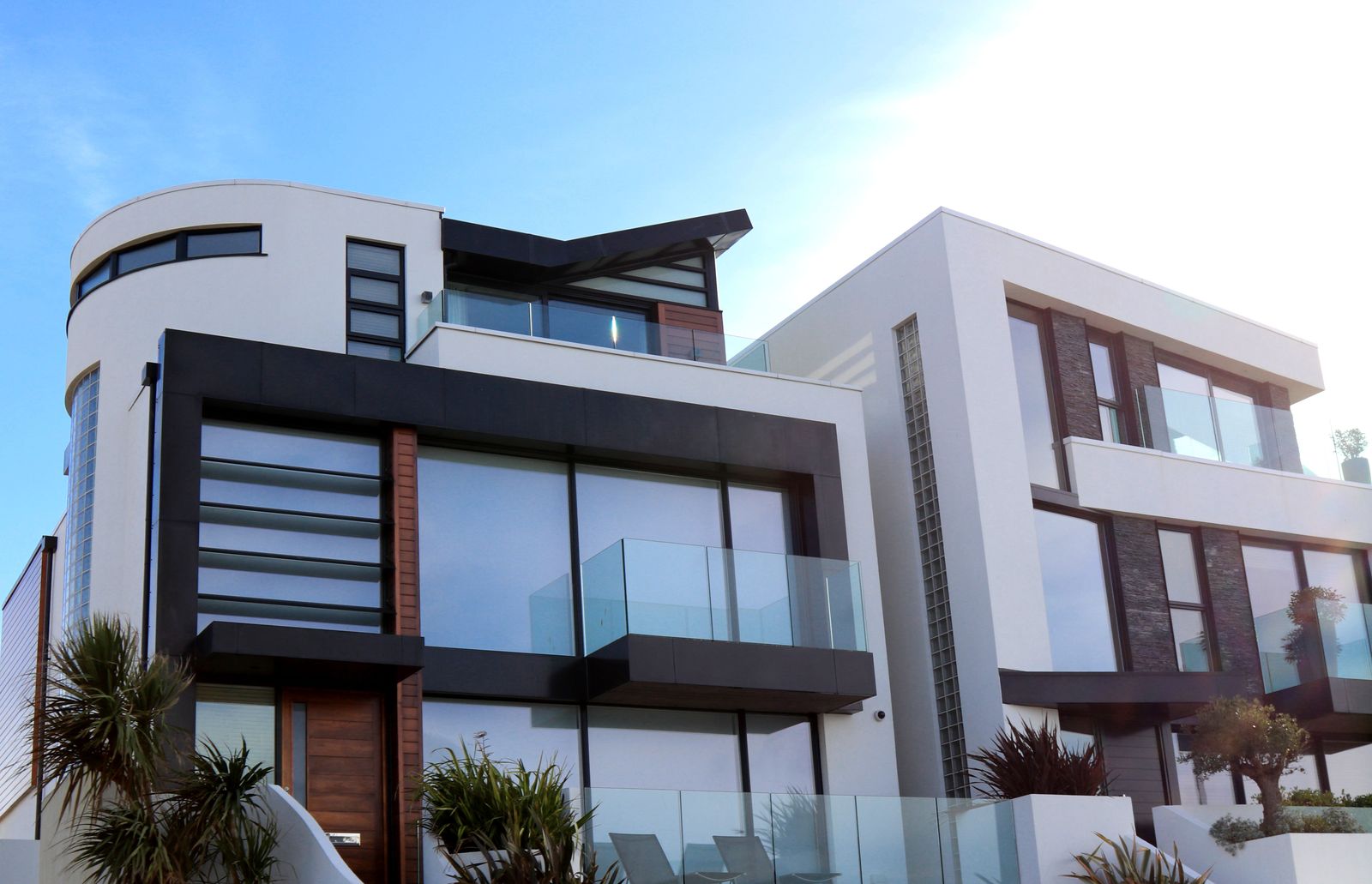
Grazing, washing, and accent are ways of placing a beam. They are not a checklist for every elevation.
Grazing
The light sits close to a textured wall so joints and faces throw shadow. That distance is often measured in inches, but the right gap depends on the material, the beam, and how tall the wall is. On a smooth painted plane, grazing is usually the wrong tool.
Washing
The fixture is pulled farther out and given a wider beam so a quiet wall stays even. Spacing and output have to be judged on the actual surface. Too much overlap, or fixtures too far apart, can leave bright tongues or dark bands.
Accent
A narrower beam can pick a column, a chimney, a gable, or a door surround. Lighting each vertical feature on its own is often cleaner than stretching one flood across several and hoping the edges match. That is a preference, not a rule for every house.
The front door is not a second façade
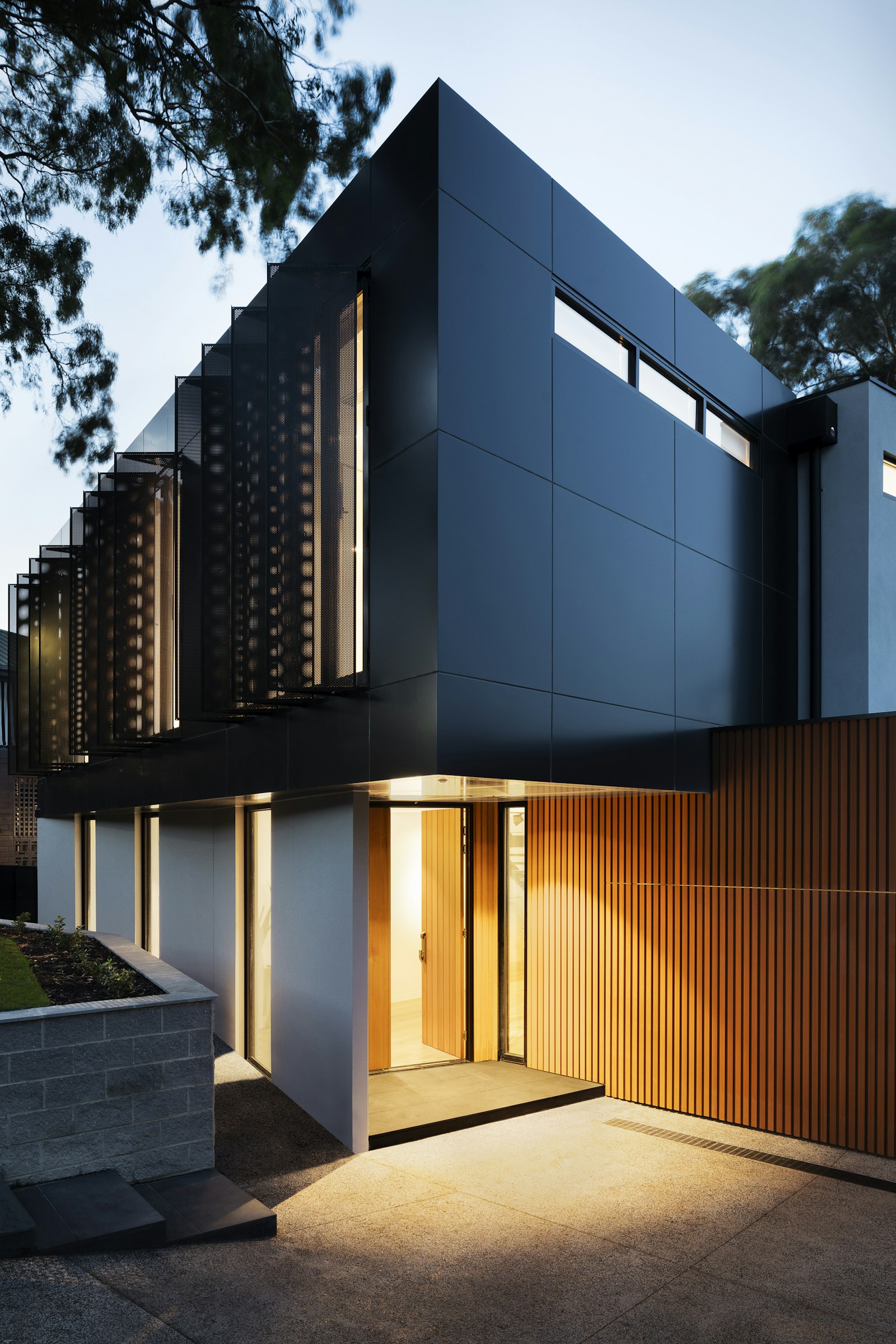
Someone arriving needs to see the lock, the step, and a face. That is a different job from making a two-story wall glow. A shielded downlight in a porch ceiling or a deep eave puts light on the threshold without putting a lamp at eye height. A wall lantern can work when the shade hides the source. An exposed bulb beside the door will take over the porch.
If the house already has a decorative entry fixture, new architectural light should support it. Another bright point two feet away usually does not.
The last few feet of walk are path and step lighting. Planting at the foundation is landscape lighting. They meet at the door, but they are not the same drawing.
Keep the beam on the building
Light that continues past the eave into the sky is wasted, and on a tall wall it is a common reason neighbors complain. Aiming so the beam dies at the cornice or the roof edge, using a shield when the lamp would otherwise show, and choosing an output that matches the wall—not the brightest lamp on the truck—does more for the house than flooding it.
Warmer white light usually sits more quietly on brick, wood, and painted stucco than a cool, blue-white flood. How warm, and how bright, still depends on the existing interior light, the street, and the surfaces. A silhouette—lighting a wall behind a tree, a screen, or a gate so the object reads as a dark shape—only works when that wall is reasonably even and the outline is clear.
Want the house to look finished after dark?
Call +1 (916) 927-9161 or email [email protected] if you want architectural lighting for a Sacramento home—walls, entry, and building form without glare in the windows.